
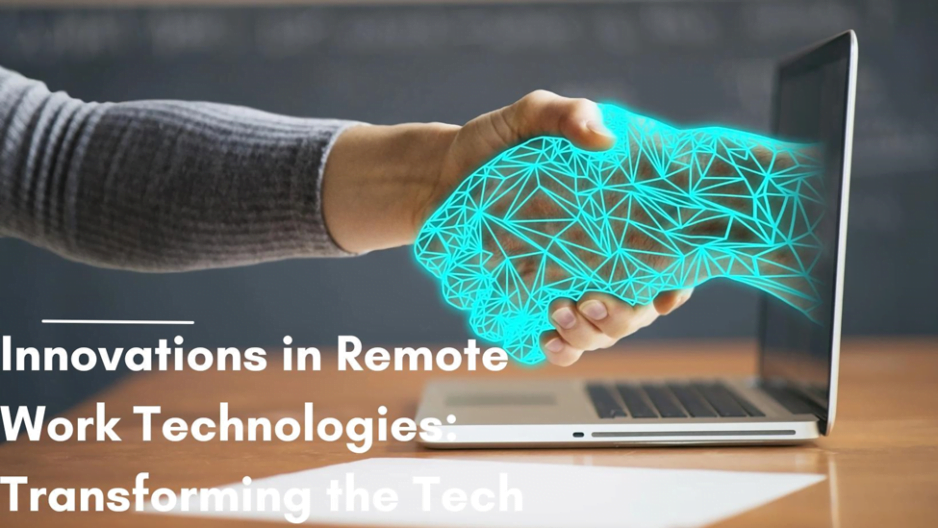
Innovations in Remote Work Technologies: Transforming the Tech Industry

Introduction:

The global shift towards remote work has spurred a wave of innovations in technology designed to enhance collaboration, communication, and productivity. In this article, we explore the latest tools and technologies that are reshaping the landscape of remote work, with a particular focus on their impact within the tech industry.

Collaborative Platforms:

Remote collaboration platforms have become the cornerstone of virtual teamwork. Tools like Slack, Microsoft Teams, and Asana facilitate real-time communication, project management, and seamless collaboration among tech teams distributed across the globe. These platforms not only streamline workflows but also foster a sense of connectedness among remote teams.

Video Conferencing Solutions:

The rise of video conferencing has transcended simple virtual meetings. Technologies such as Zoom and Microsoft Teams provide immersive virtual environments, enabling face-to-face interactions, screen sharing, and collaborative document editing. These tools have become indispensable for remote tech teams conducting meetings, brainstorming sessions, and code reviews.

Cloud-Based Development Environments:

Cloud-based development environments, exemplified by platforms like GitHub Codespaces and GitLab, allow developers to work on projects seamlessly from anywhere with internet access. These tools provide a centralized repository for code, collaborative coding features, and the flexibility to work on projects without the need for local development environments.

Virtual Reality (VR) for Remote Collaboration:

The integration of virtual reality in remote work is an emerging trend. VR platforms like Spatial and Mozilla Hubs offer immersive meeting spaces where team members can collaborate in a 3D environment. In the tech industry, this technology holds the potential to revolutionize virtual prototyping, design reviews, and interactive coding sessions.

AI-Enhanced Productivity Tools:

Artificial intelligence is increasingly being integrated into productivity tools to enhance efficiency. AI-powered tools like Grammarly for writing, Otter.ai for transcription, and scheduling assistants like x.ai help automate mundane tasks, allowing tech professionals to focus on more complex and creative aspects of their work.

Cybersecurity Solutions for Remote Work:

With the rise of remote work comes an increased focus on cybersecurity. Advanced threat detection, secure VPNs, and multi-factor authentication solutions ensure the protection of sensitive data and intellectual property. Technologies like Zero Trust Architecture are gaining prominence in securing remote work environments.

Conclusion:

Innovations in remote work technologies have transformed the way tech professionals collaborate, create, and innovate. As the tech industry continues to embrace remote work as a long-term reality, the evolution of these tools is poised to play a pivotal role in shaping the future of work. By fostering connectivity, productivity, and security, these technologies empower remote tech teams to overcome geographical barriers and work together seamlessly in the digital era.

DeepMind Gemini: Pioneering the Future of AI

Introduction:

In the dynamic landscape of artificial intelligence, Google DeepMind’s Gemini project emerges as a beacon of innovation, reshaping the contours of what is possible in the field. This article delves into the depths of the Gemini project, analyzing its breakthroughs and potential impacts, and how it stands as a trailblazer in shaping the future of AI.

Breakthroughs in AI Advancements:

Gemini represents a quantum leap in AI capabilities, showcasing breakthroughs that redefine the boundaries of machine learning. From enhanced pattern recognition to more nuanced decision-making processes, the project introduces a new era of AI sophistication. The fusion of deep learning and reinforcement learning techniques in Gemini exemplifies a synergistic approach towards achieving unprecedented cognitive abilities in machines.

The Power of Generalization:

One of Gemini’s standout features lies in its capacity for generalized learning. Unlike conventional AI models that excel in specific tasks, Gemini demonstrates adaptability across a spectrum of challenges. This ability to generalize learning contributes to more versatile and robust AI systems, promising applications in diverse fields from healthcare to autonomous systems.

Potential Impacts on Industries:

As we analyze Gemini’s breakthroughs, it becomes evident that its potential impacts extend across various industries. In healthcare, the model’s ability to analyze complex medical data could lead to more accurate diagnostics. In finance, Gemini’s nuanced understanding of market trends may revolutionize predictive analytics. The project’s versatility positions it as a transformative force with applications spanning from scientific research to personalized user experiences.

Ethical Considerations and Transparency:

The power encapsulated in Gemini raises ethical considerations that demand attention. DeepMind, recognizing the importance of transparency and responsible AI development, has laid the groundwork for ethical guidelines. Discussing these considerations is crucial as the industry navigates the balance between technological advancements and ethical responsibility.

Collaborative Innovation and Open Research:

DeepMind’s commitment to collaborative innovation and open research is a cornerstone of the Gemini project. By sharing insights, methodologies, and findings, the project fosters a collaborative ecosystem, accelerating the collective progress of AI research. This openness not only propels the Gemini project forward but also contributes to the broader landscape of AI development.

Conclusion:

In conclusion, Google DeepMind’s Gemini project stands at the forefront of AI innovation, pushing the boundaries of what AI can achieve. As we analyze its breakthroughs and potential impacts, it is clear that Gemini’s influence extends beyond individual applications, shaping the future of artificial intelligence itself. With ethical considerations at its core and a commitment to openness, Gemini paves the way for a future where AI not only excels in specific tasks but possesses a generalized intelligence that can navigate the complexities of the real world.